
By James Booth
In the first two parts of this series, I covered how to prep your equipment and the shots to take before the actual ceremony begins. In this final part, I'll cover the ceremony itself, the reception and that special time after the wedding. If you haven't read the previous two articles, go ahead and give them a read. You'll find links to them at the end of this article.
All photos in this article are courtesy of Gary Maiers of Robin Gary Photography in Moline, IL. After twenty years in marketing, Gary opened his own studio, and with his wife JoAnn, has specialized in wedding photography for the last twelve years. Gary left film behind three years ago and has been strictly digital since. His work can be seen at http://www.robingary.net.
[Due to production requirements on our server, all the images provided have been converted to .GIF format, and therefore are not at their optimal viewing quality. Gary's pictures are, in reality, of much higher quality. -- DG]
The ceremony
This is it: the main event. Everything that happens over the next hour or so will only happen once, so make sure to catch it and make every shot count.
The ceremony itself is really one of the easiest and most straightforward parts of shooting a wedding. Basically, you want to catch a couple of shots of every person as they enter the chapel, or wherever the actual ceremony is taking place, and everything else that happens.
This means the parents and grandparents, groom and groomsmen, flower girl, ring bearer, bridesmaids, and oh yes, the bride. She'd probably appreciate a shot or two of her father walking her down the aisle. Make sure you get a picture of the father giving her to the groom like you can see in Figure A. Don't forget to take shots of any musicians, singers, speakers or anything or anyone else that is a special part of the ceremony, such as the lighting of a Unity candle.
FIGURE A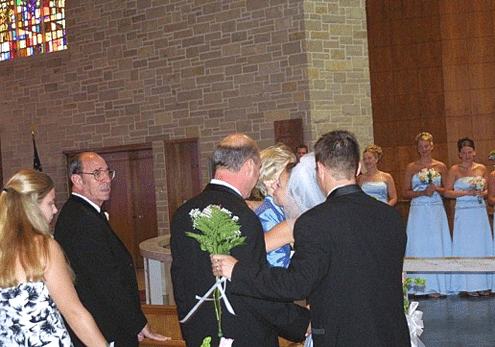
The parents giving away the bride is a wedding standard. (click for larger image)
After the wedding, you might want to go into Photoshop and straighten the picture, and do any other simple adjustments necessary for a crisp shot. However, we'd recommend you give the newly married couple their choice of both the original image and the retouched image. Sometimes the "on-the-fly" look seems more real.
You now will now have your best opportunity during the entire ceremony to get shots of the bride and groom as they will be in the same spot and position for about half an hour. Depending on the layout of the location, and the policy of the person officiating, you should try to get shots of the exchange of vows from every possible angle.
Not every wedding officiator will allow flash photography during the ceremony. If not, you'll have to use available light. The straight-on shot is kind of a given, but if you can get shots from the far left and far right, you may be able to catch the bride and groom's faces during the exchange of vows.
It all depends on how they're positioned. You have to get the exchange of rings like Figure B.
FIGURE B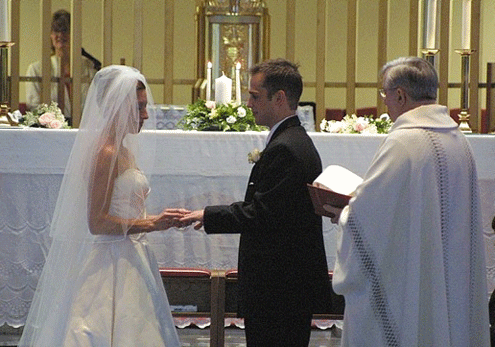
A shot of the ring exchange is a must. (click for larger image)
Of course, an official photo of the kiss as in Figure C. Since this is the end of the actual ceremony, the officiator will present the couple and the party will exit the chapel. Make sure to capture all of this. This is essentially the reverse of the entry, so handle it the same way and catch everyone in the party as they exit.
FIGURE C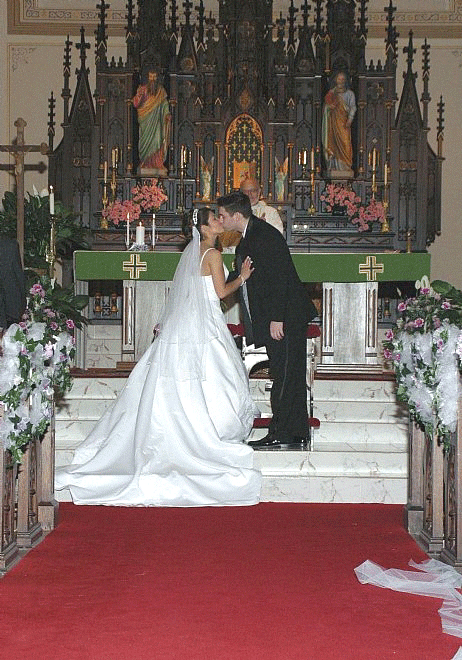
Of course, the kiss is a mandatory picture. (click for larger image)
The receiving line generally comes next. I don't personally recall ever seeing a photographer covering the receiving line, but that doesn't mean it doesn't happen. You'll have to discuss this with the couple beforehand.
After the receiving line, you will need to finish up any of the formal shots that couldn't be done prior to the ceremony and then get the departing shots of the couple with the tossing of the birdseed, rice, confetti, streamers, bubbles or whatever they have chosen to use.
One special tip: this is a good time to be sure you have lens cleaner. Sometimes all that stuff being tossed can get on your lens. A quick clean can make all the difference!
If you don't have to cover the receiving line, this would be a good time to set your equipment back up if you still have formals to do. Sometimes, if you still have a lot of shots to take before the reception, you'll have to do the departing shots, like the one shown in Figure D, first so the guests can leave, then finish your formal shots.
FIGURE D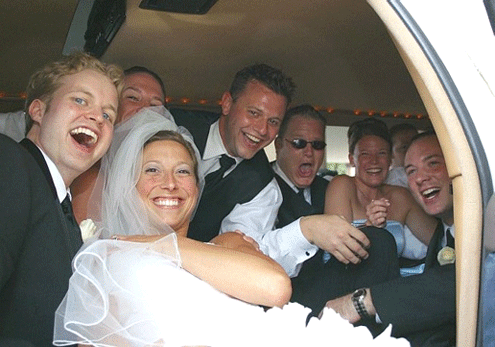
How many members of the wedding party can you fit into a limousine? (click for larger image)
The reception
Perk up! If you've made it this far you're almost done. Fortunately, you won't have to stay for the entire reception. At some point the formality will devolve and things will begin to get silly. You'll want to hang around long enough to catch a little silliness on film, then you can call it a night. If you're a friend of the family and you want to stay for the full run of festivities, store your camera gear away somewhere safe, and make sure you've got a designated driver.
You'll want to capture the bridal party as they arrive at and enter the reception. Then, generally the feeding frenzy will begin. Seeing as how you're most likely a friend or family member, which is how you got roped into this gig in the first place, you should be entitled to a little feed too. But first, get some shots of the cake, like the one shown in Figure E, and get table settings while they're still pristine.
FIGURE E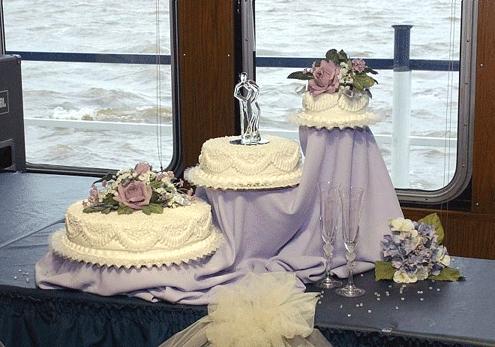
Preserve the cake with a picture. (click for larger image)
After everyone has pretty well stuffed their gullets, it will be time for the toasts. Be sure to get shots of all the toasts and the reaction of the wedding couple like the shot shown Figure F, and then it's cake-cutting time.
FIGURE F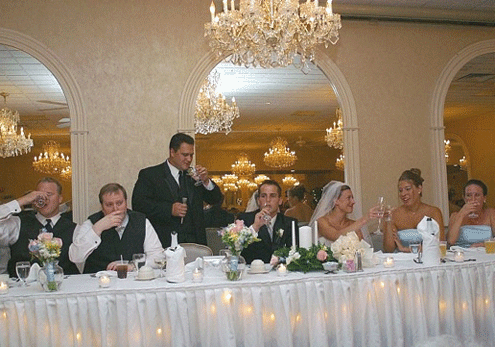
Be sure capture the toasts on film. (click for larger image)
You'll want to capture the bride and groom cutting the cake and the subsequent feeding of the cake, or smearing of the cake in the face, whichever it is. Figure G shows the couple sharing champagne. All the sugar in that frosting is going to provide the fuel for the goofiness to come. When the cake is finished, then usually the dancing will begin and you're looking down the home stretch.
FIGURE G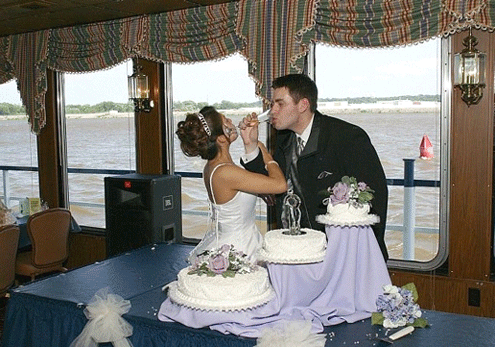
Sharing of cake and champagne are standards of wedding photography. (click for larger image)
The dancing will generally be the end of your work. The first dance of the married couple, like Figure H, and the father's dance with the bride, as in Figure I, are mandatory shots.
FIGURE H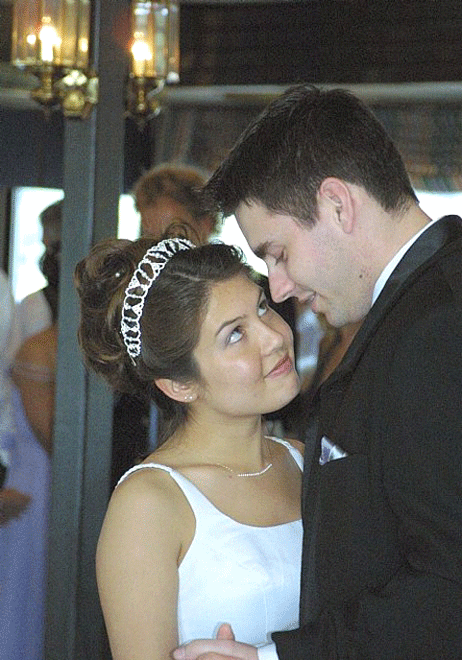
Their first dance as a married couple. (click for larger image) FIGURE I
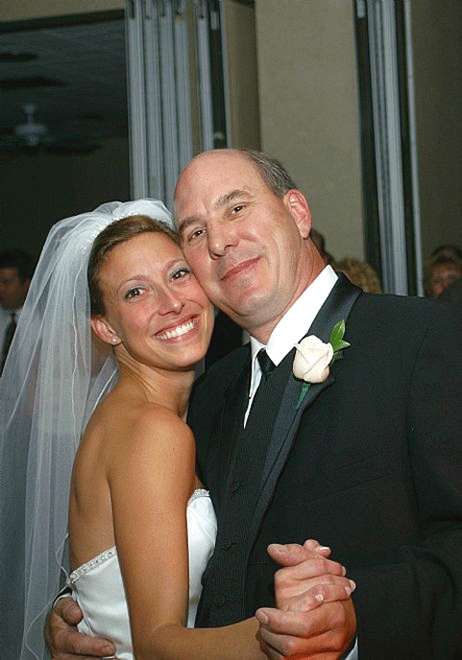
Daddy's little girl is all grown up. (click for larger image)
I'm sure the mother of the groom would appreciate a picture of her dancing with her son. Once you get those standards taken care of, you're pretty much at your discretion as to what other dancing shots to take.
Often times, couples will have Dollar Dances, in which guests pay a dollar or more to dance with the newly married couple. This is a good opportunity to get shots of people that are important to the couple dancing with them, such as grandparents, wacky aunts, and so forth. You may want to discuss this with the couple ahead of time.
Once the formal dancing is over, the ball really gets rolling. This is the point where the silliness begins, usually with the tossing of the bouquet and the removal and tossing of the garter. Be sure to get pictures of both as in Figure J.
FIGURE J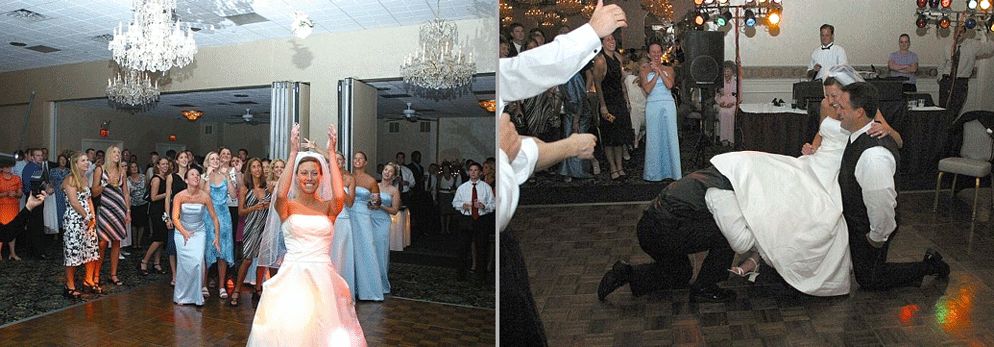
Make sure to catch the tossing of the bouquet and garter. (click for larger image)
Afterwards, the dance floor will open up for everyone and you'll begin to see things like the Chicken Dance, Macarena, Electric Slide, and all those other silly dances they do at wedding receptions. Get a few shots of the couple and guests engaging in idiocy in their formalwear, the crazier the better, then pack up your gear and enjoy yourself. It's been a long day and you've earned it.
The aftermath
The bride and groom are, of course, going to want to see their pictures as soon as possible. If they're trotting off to their honeymoon, then you've got a little time, so don't sweat it. If not though, get your film developed (or read into your computer if you're doing this digitally) as soon as possible.
If you're shooting on film, it would be a good idea to number the back of the proofs and make a key for the negatives so they can be easily identified later for prints. Remove any obviously bad shots and get the proofs to the couple so they can pick the prints and sizes they want.
Have the prints made (or make them yourself) and your job is essentially complete. Some photographers will put the album together for the couple; others merely deliver the finished prints. Which you choose to do is between you and the couple. If you don't plan on doing any more wedding photography, then have a few prints made for yourself as mementos and give everything else to the couple.
If you want to continue with shooting weddings as the opportunity arises, then have double prints made of the proofs and number both sets. Keep one set, the negatives and key for yourself, and give the other set to the couple. If you're shooting digitally, it might be nice to give the couple their photos on CD-ROM as well, so they have the images for their digital library.
If you're a friend, you may want to give all the photos to the couple. But if you're doing this for money, you may want to engage in a practice as old as weddings (or at least as old as wedding photography). As you are now a budding wedding photographer, you may want your clients to come back to you if they want to buy extra prints.
Summary
Just because a couple doesn't have a lot of money doesn't mean they don't deserve professional looking wedding photos. I was taught a long time ago that anything worth doing, is worth doing well. This was never more true than wedding photography, because the events in a wedding only happen once. If you're willing to take on the responsibility of shooting a wedding, then you have an obligation to do the best job possible.
Knowing your equipment and preparation beforehand will go a long way to making your job a lot easier. Not every wedding will be as formal as the examples or necessarily follow the pattern I have outlined here, so find out ahead of time what the sequence of events will be.
You also need to have confidence in yourself. If you don't, you won't be able to command the shoot and direct people. But that doesn't mean being pompous, arrogant, or full of yourself either.
Be prepared for on the spot requests during the shoot. Do your best to accommodate them, but if time is becoming a factor, don't hesitate to let them know. Ultimately, try to relax, have fun, and make the best out of it. Good luck and good shooting.
James Booth is a self-taught PC and Palm device user that dabbles in graphics and photography. He can be reached at lizardworks@mchsi.com.