By James Booth
You may have heard the term "SLR" tossed about, or seen it in an article and wondered what it meant. Well, sit back and I'll try to explain what an SLR camera is and why I think an SLR camera is far superior to point-and-shoot models -- whether we're talking digital or film.
The mystery revealed
So what is an SLR? SLR is an anagram for Single Lens Reflex. What this means is that the camera uses one lens that reflects the image to a viewfinder by means of a mirror.
You may think, "Well, duh, every camera has a single lens." Yes, these days, every camera you see has only one lens, but there was a time when TLRs, or Twin Lens Reflex cameras were very popular. That's right, two lenses. One lens was for viewing and composing the image, the other for actually taking the image. The most popular model was the Rolleiflex shown in Figure A. But now though, for the most part, cameras just have a single lens for both viewing and taking the picture.
FIGURE A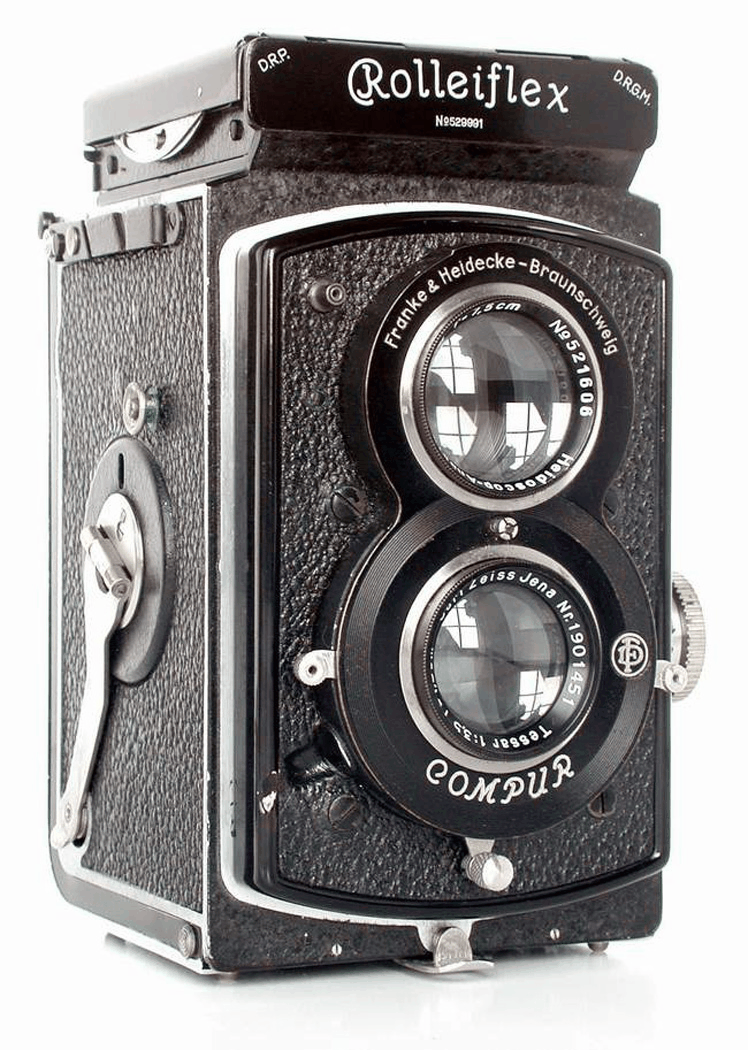
The Rolleiflex TLR was the first reflex camera. (click for larger image)
How it all works
How does all this reflecting work, and why is it better? Well, it all works out like this...
Light enters the front of the lens, passes through and hits a mirror. The image is then reflected up to a ground-glass focusing screen for viewing, and sometimes to a five-sided pentaprism and to a viewfinder. When you release the shutter, the mirror flips up out of the way, and the film or image sensor is exposed. Figure B illustrates how an SLR works.
FIGURE B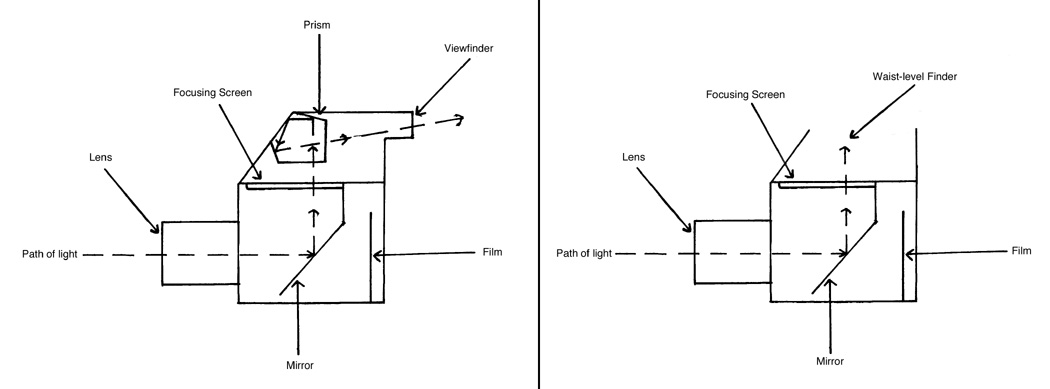
My crude drawing shows how an SLR camera works. (click for larger image)
The biggest advantage to the Single Lens Reflex camera is that you see exactly what the lens sees. What you see is what will be captured on the film or image sensor. When I got my first SLR, my dad explained it to me by saying, "What you see, is what you get."
I personally hate waist-level finders, where you view the image directly on the focusing screen. The problem with these is that the image you see is reversed left-to-right, because it's a mirror image. This makes composing kind of difficult because you have to remember to move the camera right to adjust the image to the left. I much prefer a prism finder, so that the image you see is corrected left-to-right and top-to-bottom.
This is better why?
In addition to being able to see exactly what the camera sees, another advantage of the reflex camera is a depth-of-field preview. Most SLR cameras have interchangeable lenses with full aperture control. These lenses generally have manual and automatic aperture settings. By putting it on manual, you can adjust the aperture setting and see how the depth-of-field will be affected. On automatic, you see the image as if the aperture were wide open. But when the shutter is released, it will automatically close down to whatever aperture you have set.
What's the difference?
Fixed focus, or point-and-shoot cameras, whether film or digital, have a fixed lens and aperture, and a rangefinder instead of a viewfinder. Instead of looking through the lens, you look through a separate little window to compose your picture. You don't actually see the same image as the lens, so composition is a little more difficult as you're never really sure what you're going to get.
The disposable film cameras, and their reloadable counterparts, as well as the inexpensive digital cameras shown in Figure C are an example of these kinds of fixed-focus cameras.
FIGURE C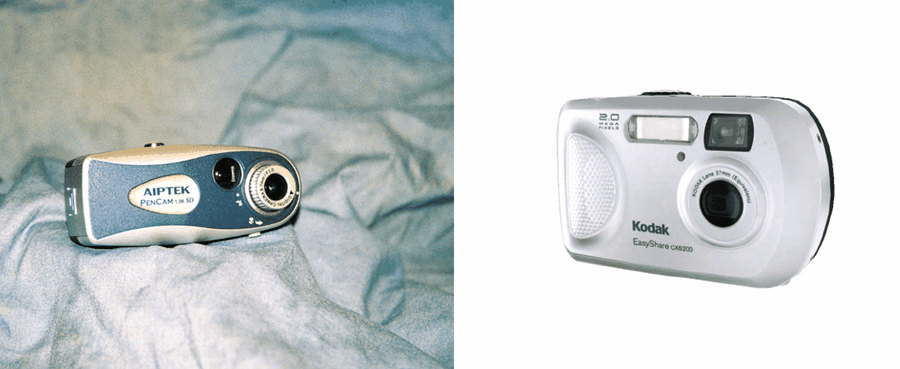
Point-and-shoots sacrifice quality for convenience. (click for larger image)
Between the SLRs and the point-and-shoots are the hybrid 35mm cameras, like the Pentax IQ Zoom and the Fuji FinePix in Figure D.
FIGURE D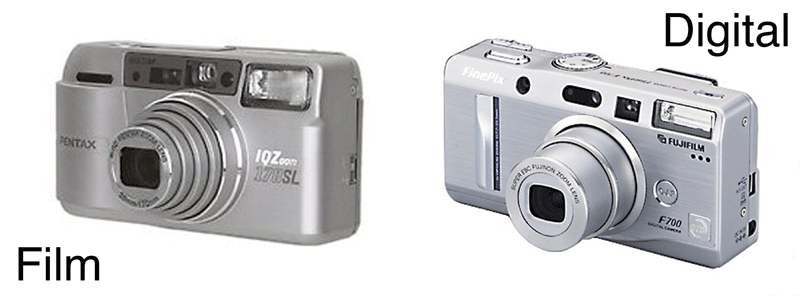
Hybrid 35mms are a step up from point-and-shoot cameras. (click for larger image)
These are a marriage between the convenience and ease of operation of the point-and-shoots, and advanced lens function of the SLRs. For the most part, they still utilize a rangefinder and fixed aperture, but have a zoom lens for getting closer shots.
SLR cameras come in wide range of makes, styles, and formats in both film and digital. Figure E shows a Minolta Maxxum and a Kodak DCS Pro SLR, two of the common styles.
FIGURE E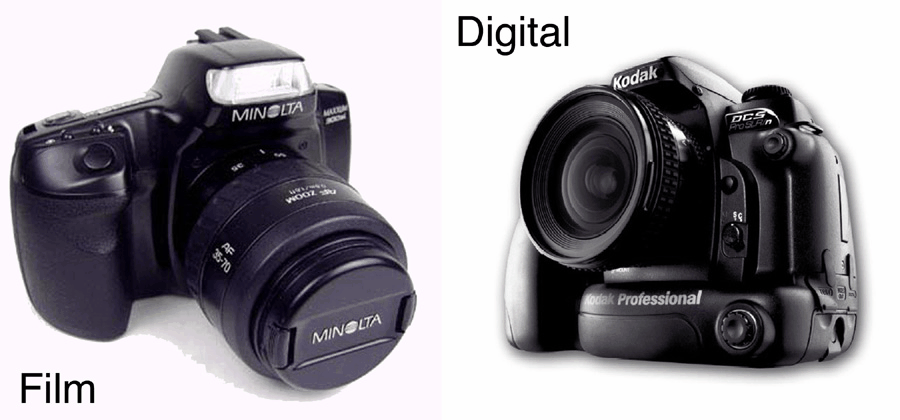
Two popular SLR models. (click for larger image)
SLRs aren't limited to just 35mm either. My Mamiya 645 Pro in Figure F is an SLR as well. Even though it's a medium format camera, it works basically the same, just on a bit larger scale. And Connected Photographer Editor-in-Chief David Gewirtz and author John Roling both use the Canon Digital Rebel, which is a digital SLR.
FIGURE F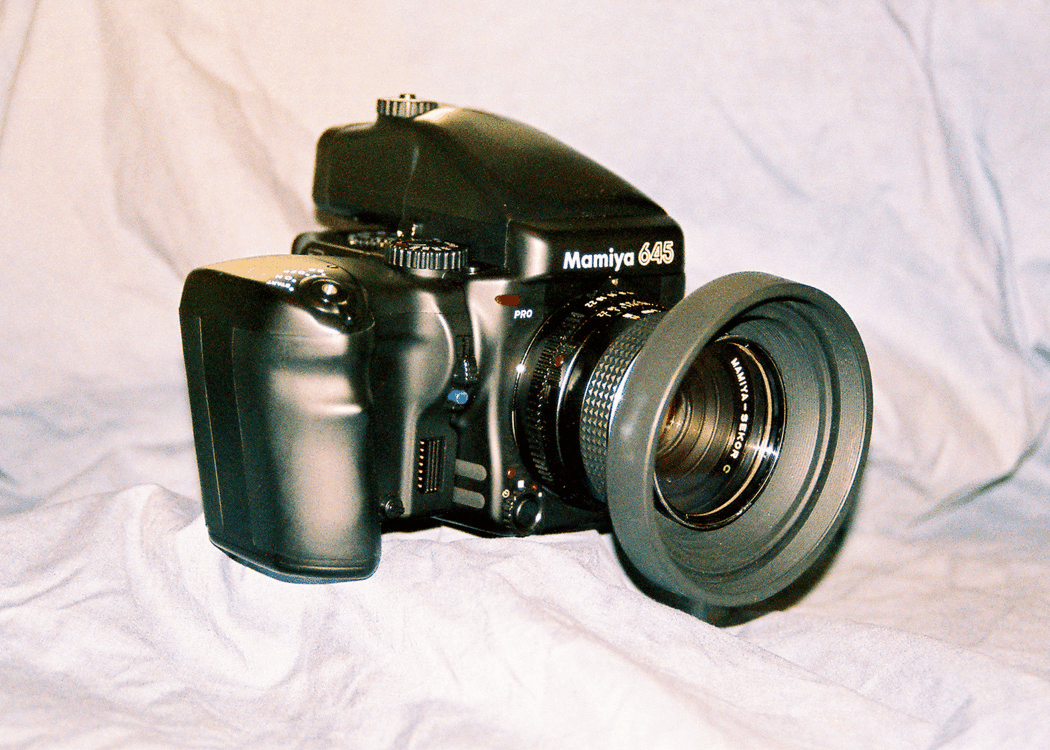
The Mamiya 645 Pro medium format camera is an SLR also. (click for larger image)
And the point is?
Whether film or digital, Single Lens Reflex cameras are far superior to point-and-shoot or hybrid 35mm cameras. They allow the photographer to actually see exactly what the lens sees and what will be captured on the film or image sensor. In addition, they give you a finer degree of control over depth of field.
Is an SLR for you? That depends. What kinds of pictures do you take? If you take primarily snapshots and candids, a point-and-shoot or hybrid 35mm, film or digital, is perfect for you. But if you aspire to artistic, stock, portraits, or wedding photography you need to have the quality and control that only an SLR can give you. Good luck and good shooting.
James Booth is a self-taught PC and Palm device user that dabbles in graphics and photography. He can be reached at lizardworks@mchsi.com.