
By James Booth
Do you have one of those old box cameras sitting on your shelf? Maybe you found it in the basement, garage, attic, or thrift shop. It makes a nice little knick-knack doesn't it? But surely it isn't worth anything in this day and age? It doesn't even work, does it? Well, that may not necessarily be so. Wouldn't you like to find out?
For a glorified pinhole camera, when in working condition, these cameras actually take pretty good pictures, as you can see in Figure A
FIGURE A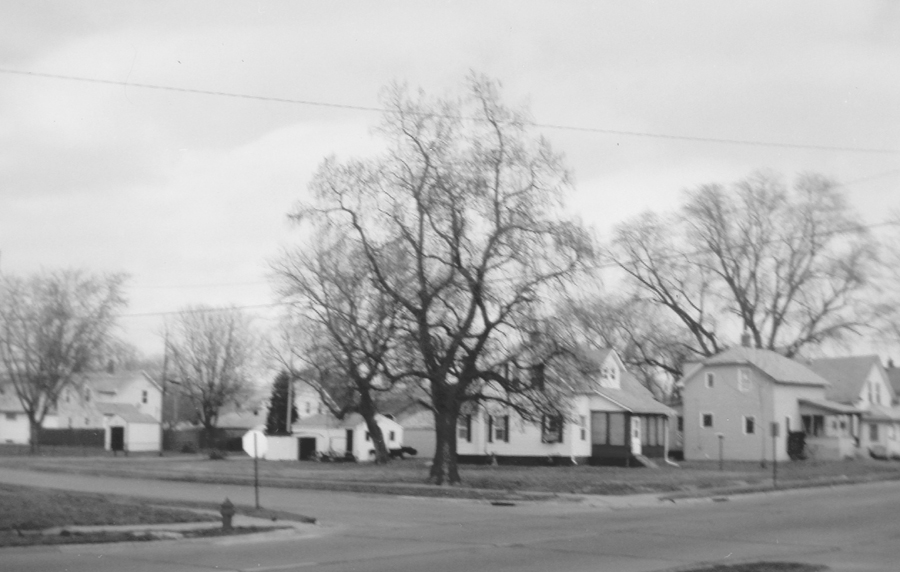
The old box cameras can still take pretty decent pictures. (click for larger image)
Here's an interesting question, though. Can you still get film for them? The answer is Yes -- and no.
These little box cameras, like the Target Brownie 620 in Figure B, used 620 roll film, which is no longer available. But, you can reroll 120 film onto the 620 spindles for use in these cameras, and I'm going to show you how.
FIGURE B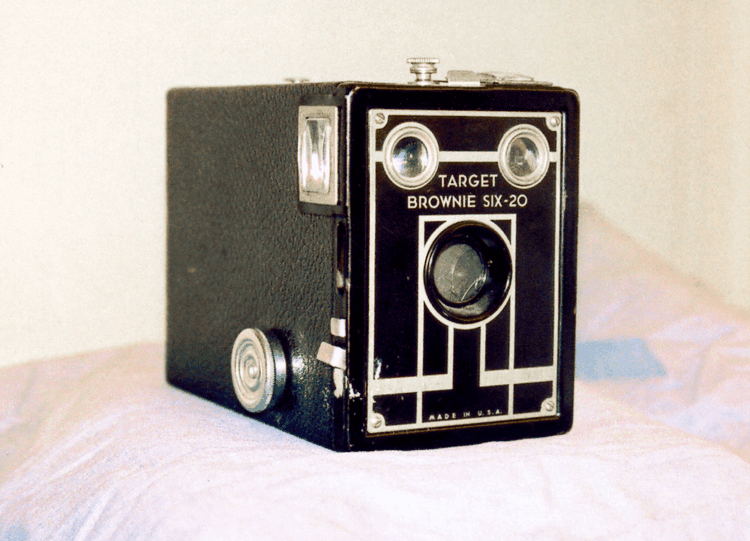
The Brownie line of box cameras was an inexpensive introduction to photography. (click for larger image)
Brownie, and other manufacturers, made a long list of box cameras that took 620 film, so this tutorial isn't just for the Target 620. That just happens to be the box camera that I have.
And away we roll
In order to reroll 120 onto a 620 spool, you're going to need some 620 spools. If you're lucky, like I was, they were in the camera, otherwise, you're going to have to scour second-hand stores, thrift shops, antique stores, and garage sales. You can sometimes find them on the eBay as well, if you look hard enough.
Now that you have the 620 spindles and the 120 film, you're going to need a completely dark area to unroll, then reroll the film. You could sit in the bathroom, closet, basement or whatever, waiting twenty minutes or so until your eyes adjust and check for any light leaks, then plug the leaks and wait again, or you can use a nifty little trick my father taught me.
Take a heavy coat, preferably a long winter coat with a hood, zip/snap/button it up and fold the bottom of the coat about a third of the way towards the top. Next fold the hood down over the neck opening.
If the coat doesn't have a hood, you'll have to fold the top of the coat toward the bottom to seal the neck opening.
Now place the folded coat on your lap with the front of the coat facing down, like in Figure C. You now have a light tight bag that you can use to reroll the film merely by inserting your hands through the sleeves of the coat.
FIGURE C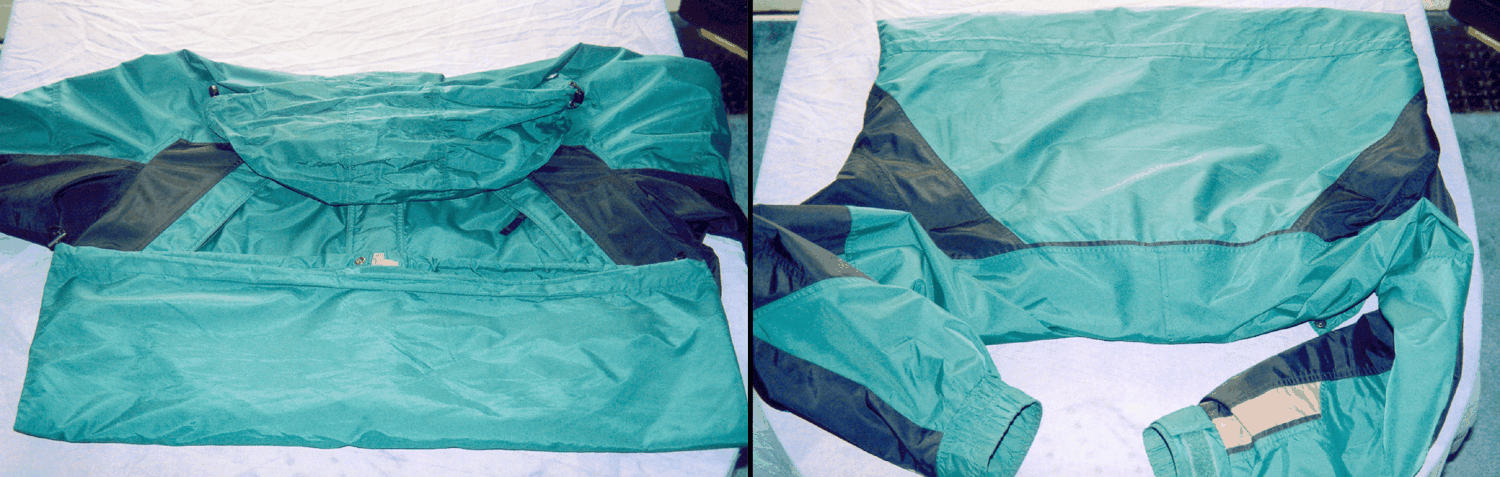
A properly folded coat makes a light-tight bag. (click for larger image)
Since you're going to be rolling this film by feel, you may want to do a few dry runs in the light with a sacrificed roll.
Let's look at the 620 spools. You'll notice in Figure D there's one wide slot and one not-so-wide slot. When you roll the film onto this spindle, you want to feed it into the wide slot and out of the smaller slot. Remember, this will have to be done by feel.
FIGURE D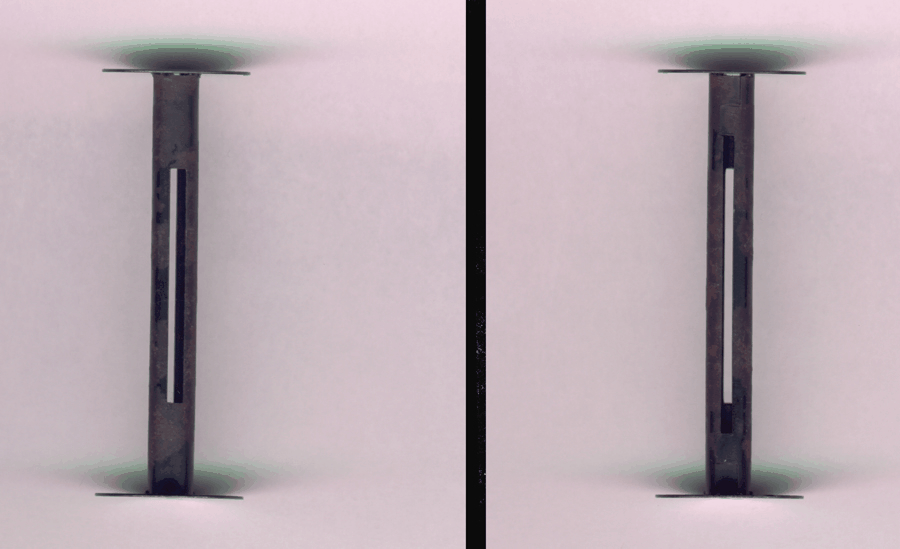
Notice the 620 spindle has one wide slot and one narrow slot. (click for larger image)
Let's get rolling
Now that we have the 620 spools and a light-tight bag, let's roll some film. First, place the 620 spindle and 120 roll inside the light-tight coat bag by sliding your arms in through the sleeves. Then, tear the seal off of the 120 roll and unwind the film, letting it roll up on itself.
Next, place the tab on the end of the paper backing into the wide slot on the 620 spindle and out through the smaller slot, like in Figure E. Make sure the film is centered and roll it up on the spindle, keeping a slight amount of tension. When you're rolling up the paper backing, be sure that you don't miss the end of the film when it starts.
FIGURE E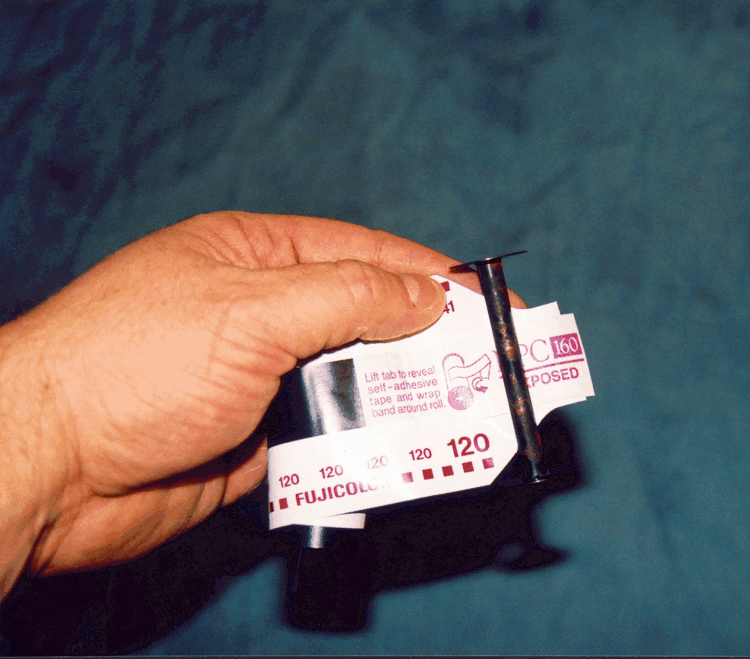
Feed the paper backing into the wide slot of the 620 spool. (click for larger image)
Because the 620 spool has a smaller diameter than the 120 spool, and because it's taped to the paper backing, the film will develop a hump as you get close to the end, which is actually the beginning of the roll. This is easily remedied by slipping your finger between the film and the backing, then sliding the tape loose from the backing as in Figure F. The film will then lay flat and the tape will reattach to the backing when the film is rolled up.
FIGURE F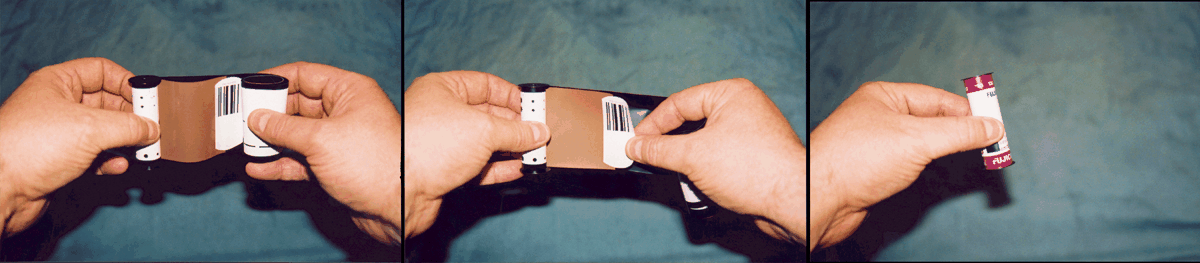
Because of the difference in spool sizes, the film will hump toward the end. (click for larger image)
Now for the camera
You have film to shoot, now let's look at the camera. On my Brownie the camera is opened by pulling the winding knob out, lifting the forward most knob on the top, and pulling the front of the camera out of the box, as in Figure G.
FIGURE G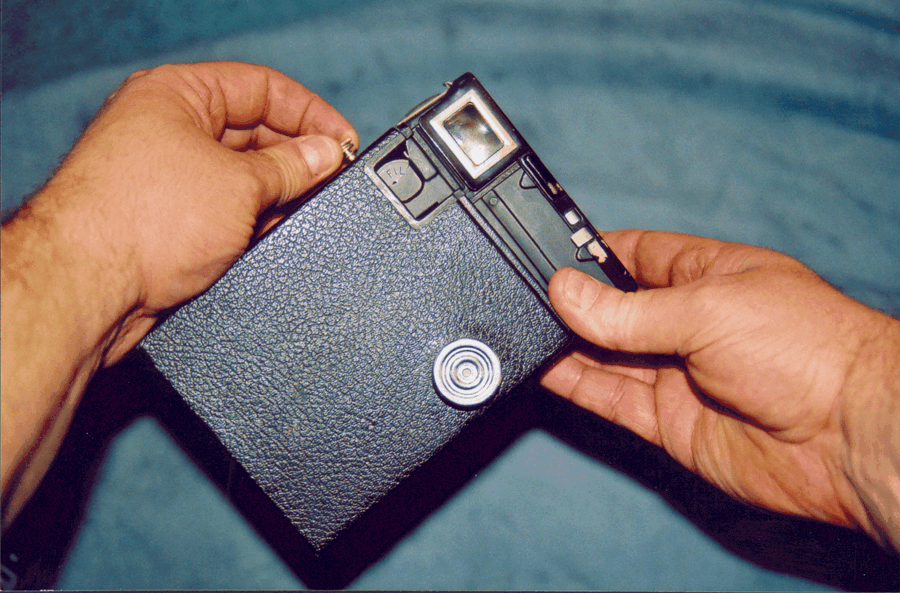
Remove the camera from the box to load the film. (click for larger image)
The full roll of film gets loaded on the top, with the paper backing facing out, and fed onto the lower spool at the bottom of the camera, like Figure H. The camera is then put back into the box. The upper knob will snap into place, while the winding knob will have to be pushed in and turned until its key seats inside the spindle.
FIGURE H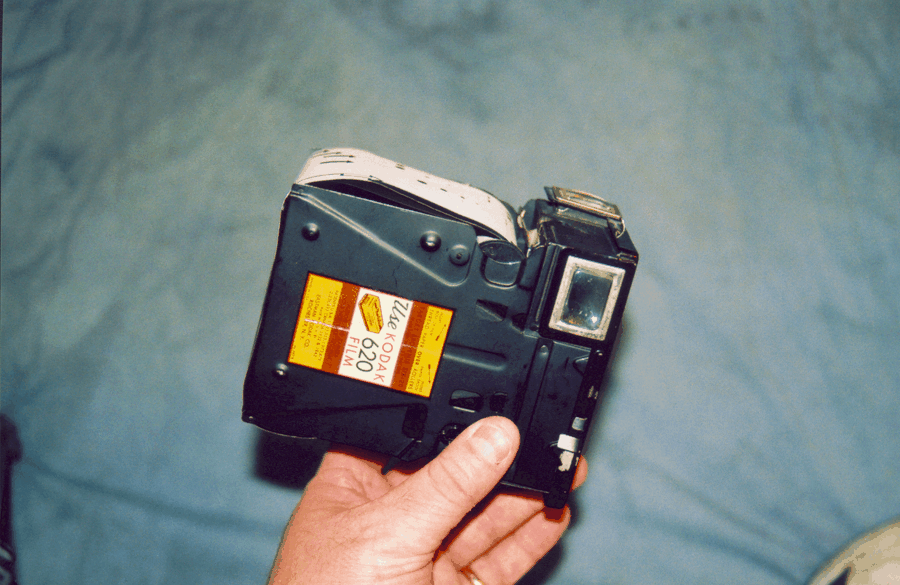
The full roll goes on top and is wound onto the lower roll. (click for larger image)
These box cameras are pretty simple to operate. They have a fixed focus lens that is good from about six feet to infinity and a fixed shutter whose speed I'm guessing is somewhere around 1/25th with a bulb setting. Some of them, like my Brownie, will also have multiple aperture settings.
Composing your image is done with the vertical or horizontal viewfinder, depending on how you orient the camera. These cameras, with their slow shutter speeds, are susceptible to blurring from camera shake. I recommend placing them on a stable surface when shooting.
Here comes the tricky part with these cameras: advancing the film. The films these cameras were designed for were orthochromatic, and the films made now are panchromatic. These are just a couple of fancy words that mean the old film was sensitive to all colors of light except red, and the films now are sensitive to all colors of light.
Some of you may have seen or remember the red safety lights in darkrooms. Well, those are a thing of the past. Because modern film is sensitive to all colors of light, we need to do something with that little red window on the back of the camera. A piece of black electrical tape will cover that just fine.
Unfortunately, this window is also how we know what frame we're on. After each exposure, you'll need to peel that piece of tape up enough to see the frame number as you advance the film. Don't hold it up to the light to see the numbers like I did with the first roll I shot. I burned all but the first two frames of the roll. This is something that is going to have to be trial and error on your part according to your camera and what film you're using, but you should get about eight exposures.
As for what film to use, I recommend sticking with black and white. Not only will it create a more vintage looking image, these cameras were designed for black and white film and just don't offer the clarity and sharpness that color demands.
Conclusion
Those vintage box cameras sitting on your shelf can be more than just a nifty knick-knack. With a minor amount of effort you can reroll modern film for use in these antique cameras and create some very interesting vintage looking images. Good luck and good shooting.
James Booth is a self-taught PC and Palm device user that dabbles in graphics and photography. He can be reached at lizardworks@mchsi.com.